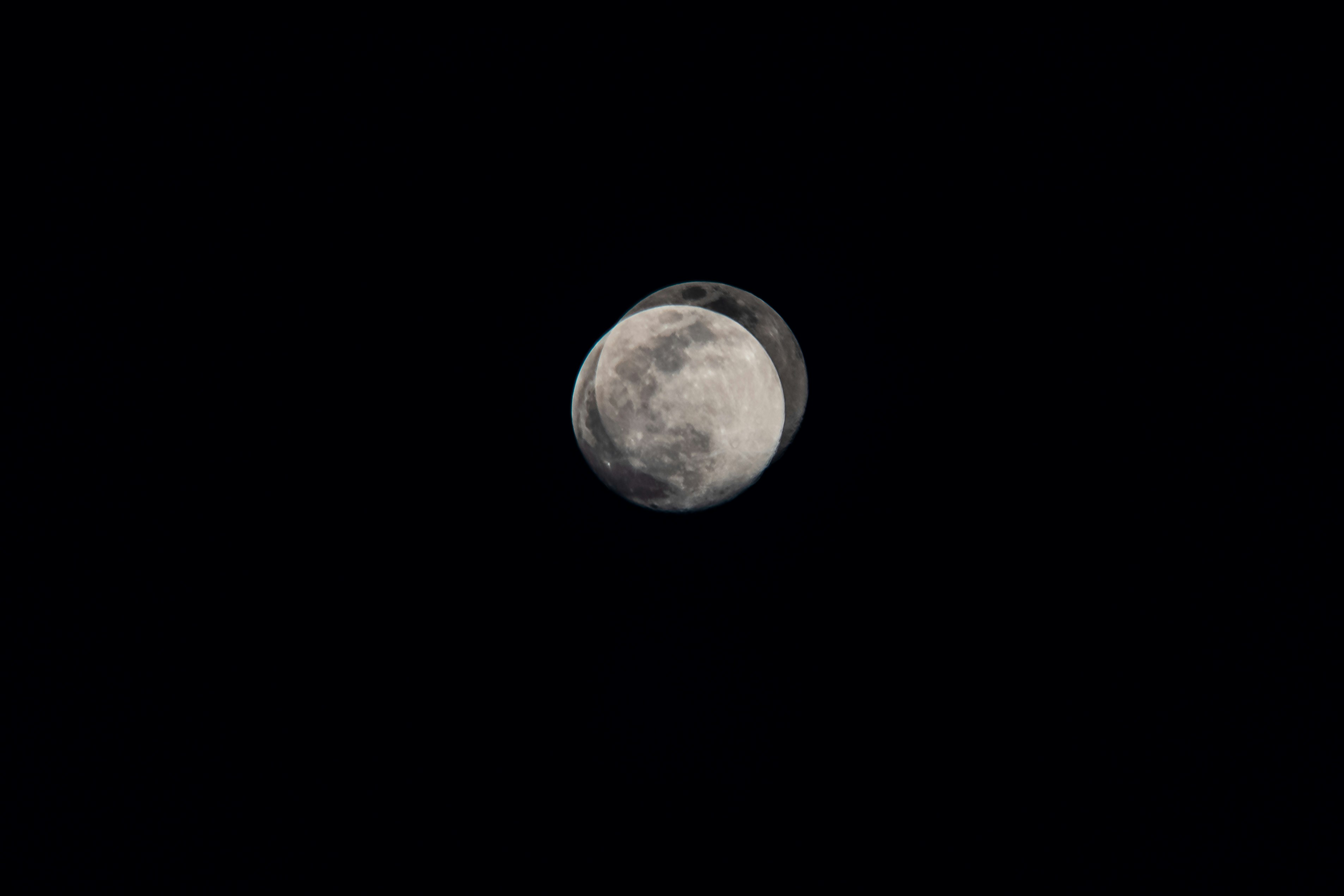
What is a Quasi-Moon?
A quasi-moon is a type of celestial object that follows an orbit around a planet but does not possess the gravitational binding characteristic of a traditional moon. Unlike conventional moons, which maintain a stable, long-term relationship with their host planet, quasi-moons exhibit a more transient nature in their orbital patterns. These objects may come close to a planet and mimic the behavior of moons for a period, but they ultimately do not remain attached to the planet’s gravitational influence over time.
The motion of a quasi-moon is often influenced by various gravitational forces, including those from the planet itself, nearby celestial bodies, and even the Sun. While quasi-moons can be temporarily drawn into a stable orbit, such orbits are frequently disrupted, leading the quasi-moon to either drift away into space or to be pulled into the planet’s gravitational field, where it may eventually become a traditional moon. This unique behavior distinguishes quasi-moons from both asteroids and conventional satellites.
In our solar system, quasi-moons are a rarity. Their transient nature poses challenges for astronomers attempting to study these intriguing objects. However, when identified, they provide valuable insights into the dynamics of celestial mechanics and the complex interactions that govern the orbits of objects within a planetary system. The concept of two moons of Earth, or similar celestial configurations, illustrates how close these objects can be to fulfilling the role of a traditional moon while still operating under fundamentally different orbital mechanics. Understanding these distinctions not only adds to our knowledge of our solar system’s diversity but also informs our perspectives on potential discoveries of similar objects in distant systems.
The Discovery of 2025 PN7
In recent years, the field of astronomy has witnessed remarkable advancements, leading to the discovery of new celestial bodies that have profound implications for our understanding of the solar system. One such finding is that of the asteroid 2025 PN7, identified by researchers at the University of Hawaii. This asteroid, measuring approximately 1.7 kilometers in diameter, has piqued the interest of astronomers due to its unique characteristics and its classification as a quasi-moon of Earth.
The detection of 2025 PN7 involved sophisticated observation techniques using advanced telescopes and computational algorithms. Researchers employed methodologies that included both ground-based and space-based observations, allowing for precise tracking of the asteroid’s movements. The timeline for this discovery commenced in mid-2025 when the asteroid was first spotted during routine sky surveys. NASA later corroborated these findings, officially recognizing 2025 PN7 as a quasi-moon due to its consistent orbit around Earth.
The significance of discovering 2025 PN7 extends beyond its classification. As a quasi-moon, it temporarily shares the Earth’s orbital path, providing intriguing insights into gravitational interactions and the dynamics of celestial bodies. Its orbit is anticipated to remain stable until about 2083, which presents a unique opportunity for ongoing study. The asteroid’s relatively stable trajectory offers a natural laboratory for astronomers to observe and analyze phenomena that could inform future research regarding not only our planet but also comparative planetary studies within the broader context of the solar system.
Moreover, the discovery adds to a growing catalog of near-Earth objects and emphasizes the importance of continuous monitoring of the space surrounding our planet. As a newfound cosmic companion, 2025 PN7 enriches our understanding of what it means to have two moons, and how such celestial objects interact with Earth’s gravity.
Orbital Dance: How 2025 PN7 Travels with Earth
The asteroid 2025 PN7 has garnered considerable attention due to its unique orbital dynamics, which allow it to engage in a captivating dance with Earth. This quasi-moon, while not a natural satellite, adheres to a trajectory that closely parallels our planet’s orbit around the Sun. The interaction between 2025 PN7 and Earth is a fascinating study of celestial mechanics, wherein gravitational influences play a crucial role in shaping the paths taken by both bodies.
As Earth orbits the Sun, it travels along a specific route defined by gravitational forces, predominantly the Sun’s pull. This same gravitational influence also extends to 2025 PN7, causing it to follow a near-synchronous path aligned with Earth’s orbit. Specifically, the asteroid rotates around the Sun in a similar timeframe, which creates the appearance of it shadowing our planet. The orbital period of 2025 PN7 does not match Earth’s exactly; however, its path, characterized by slight deviations, allows it to maintain close proximity at certain points along the journey. This relationship leads to various configurations where 2025 PN7 can be found trailing or leading Earth, effectively creating an optical illusion akin to that of a second moon appearing in the sky.
Visualizing these movements can be facilitated through diagrams illustrating the elliptical trajectories of both Earth and the asteroid, highlighting the gravitational interactions that underpin this phenomenon. Appreciating the complexities of these paths underscores the uniqueness of 2025 PN7 as a quasi-moon of Earth. The scientific community continues to investigate this rare occurrence, seeking to understand the fundamental principles of celestial mechanics that enable such cosmic companionship. This knowledge not only enriches our comprehension of the solar system but also shapes our broader understanding of what constitutes a moon in the context of our planetary neighborhood.
The Future of 2025 PN7: What Happens After 2083?
As we approach the year 2083, the journey of 2025 PN7, often referred to as Earth’s quasi-moon, is set to enter a new phase as it begins to drift away from our planet. Observations indicate that this celestial body is held in a gravitational embrace by Earth, yet its orbit is not stable. After 2083, 2025 PN7’s trajectory will gradually alter due to gravitational interactions, leading it to depart from our immediate cosmic neighborhood. This transition presents both challenges and opportunities, particularly in the realm of scientific research.
The eventual departure of 2025 PN7 will likely shift our understanding of Earth’s environment in space. As it moves farther away, we will lose a unique vantage point for observing this interesting object and any phenomena associated with it. This change will fundamentally alter our perspective on the interplay of celestial bodies in our vicinity, highlighting the delicate balance of gravitational forces at play. Researchers will need to adapt their observational strategies and technologies to fill the gap left by this quasi-moon’s absence. Additionally, this might inspire scientists to focus their attention on finding new celestial companions that may serve similar roles as 2025 PN7, potentially leading to the identification of other minor planets or irregular moons.
The departure of 2025 PN7 from Earth’s orbit could also stimulate new areas of study within celestial mechanics. The movement of such bodies helps illuminate patterns in gravitational interactions, and understanding these patterns may yield insights into the history of our solar system. By observing changes in Earth’s gravitational influence and monitoring for any new objects that may enter our path, scientists can enhance our comprehension of cosmic dynamics. Ultimately, the future trajectory of 2025 PN7 will not only broaden the scope of astronomical research but may also foster a greater awareness of our celestial environment.

About TodayResearcher
At TodayResearcher, we bring you stories that matter. Covering everything from breaking news and world events to lifestyle, entertainment, science, and culture, our editorial team is dedicated to delivering accurate, insightful, and engaging content. We aim to keep readers informed, inspired, and curious about the world around them.